
Opinion
2027: Kogi West Must Be Liberated From Perpetual Marginalization.

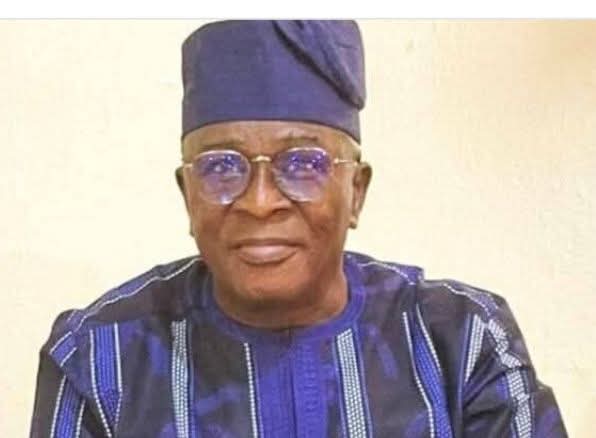
By Musa Bakare.
A powerful political awakening is sweeping through Kogi State. What was once whispered in hushed tones is now boldly proclaimed across communities, markets, campuses, town halls and in the farms. As 2027 draws near, Kogites are uniting around a clear message: enough of perpetual marginalization.
For decades, Kogi State’s governance has been marked by inequality, unfair development, imbalanced power sharing, and a disregard for its rich diversity. Despite its strategic importance and vast human potential, the state remains hampered by poor infrastructure, rising unemployment, and uneven growth. The Kogi West Senatorial District has been consistently sidelined, with promises of equity remaining largely rhetorical, told to wait ad-infinitum. Come 2027, this must be broken.
The Kogi West Liberation agitation is a people driven force against systemic exclusion. This is not an ethnic crusade; it is a movement for justice. Amid this statewide call for liberation, one truth is undeniable: Kogi West has borne the heaviest burden of marginalization and shown the greatest patience.
Kogi West has contributed intellect, loyalty, and stability to the state, yet it remains the least rewarded in the equation of power. As 2027 approaches, there is a growing consensus across Kogi State, equity demands that Kogi West be allowed to lead. This is not a plea; it is a moral and political imperative for unity and progress.
The liberation agitation serves both as a warning and an opportunity. It warns of entrenched interests who view power as winner takes all, it offers Kogi State a chance to heal old wounds through fairness, competence, and inclusive leadership.
Those mouthing “wait till 2031” are short sighted opportunists. They recently abandoned their sinking political party and now reaping rewards where they never sowed. Having sold their conscience, they are content to wait indefinitely as long as their palms are greased.
2027 Will not just be another election year. It is a referendum on fairness, equity and justice.
Ahead of 2027, the people are awake, the demand is clear: Kogi State must be liberated, and Kogi West must no longer be ignored.
– Musa Asiru Bakare, APC foundation member and political analyst, writes from Lokoja, Kogi State.




Opinion
Beyond Party Lines: The Case for Senator Akpoti-Uduaghan’s Strategic Realignment Before 2027

By Alao Adamadamosi Sunday
In Nigeria’s dynamic and often unpredictable political arena, the most astute leaders understand that loyalty to constituents must ultimately supersede loyalty to party machinery. As preparations for the 2027 general elections gradually take shape, one of the most compelling political conversations emerging from the North-Central region—particularly Kogi State—is the future political direction of Senator Natasha Akpoti-Uduaghan, the first-term senator representing Kogi Central.
Having broken significant barriers and established a formidable reputation for grassroots advocacy and principled leadership, Senator Akpoti-Uduaghan now stands at a critical crossroads: whether to seek re-election under the platform of the Peoples Democratic Party (PDP) or to consider a strategic realignment that could better serve both her constituency and her broader political vision.
Her journey to the Senate was itself a testament to resilience and determination, culminating in a landmark legal victory.
Since assuming office, her tenure has been marked by a strong focus on the infrastructural and socio-economic needs of Kogi Central, earning her recognition as a performer whose politics transcends narrow partisanship. However, politics is as much about platforms as it is about personality, and there is a growing body of opinion suggesting that her continued effectiveness and growth may require a bold move beyond her current party.
The primary mandate of any legislator is effective representation. Yet the Nigerian Senate operates within a framework heavily influenced by party hierarchies, zoning arrangements, and internal dynamics that often stifle independent-minded lawmakers.
There is a compelling argument that Senator Akpoti-Uduaghan’s distinctive voice—championing rural development, women’s inclusion, youth empowerment, and anti-corruption—could be significantly amplified in a political environment less constrained by internal party complexities and historical baggage.
The PDP, unfortunately, remains enmeshed in a prolonged phase of internal reorganisation and identity crisis. For a senator whose political capital rests on direct engagement and tangible results, the uncertainty and frequent discord within the party pose a real risk.
The people of Kogi Central voted for action and progress, not endless political drama. Should the party’s national or state-level struggles continue to divert focus, resources, and political will, her ability to deliver meaningful dividends could be inadvertently undermined.
Exploring a more stable, supportive, or locally dominant platform should therefore be viewed not as political betrayal, but as a strategic recalibration in the interest of her constituents.
Legislative influence is also largely derived from coalition-building. Senator Akpoti-Uduaghan’s appeal cuts across traditional political and social demographics, resonating strongly with youths, women, and professionals. Aligning with a party that has a stronger foothold in the North-Central region, or one actively constructing a viable national coalition ahead of 2027, could place her at the centre of a more influential political bloc.
Such positioning would not only enhance her capacity to attract federal presence and projects to Kogi Central but also elevate her standing on the national stage.
Nigeria’s political history is replete with examples of leaders whose strategic realignments catalysed greater relevance and success.
This discussion is not about unprincipled defection, but about recognising that the vehicle for delivering democratic dividends must be functional and fit for purpose.
With the political terrain ahead of 2027 already shifting, aligning with a platform that mirrors evolving voter aspirations—especially those of younger Nigerians who view her as a role model—could prove to be an act of foresight rather than opportunism.
Senator Natasha Akpoti-Uduaghan stands at a watershed moment in her political journey. Her first term has demonstrated her capacity as a fighter, a reformer, and a results-driven legislator. The decision regarding her second term should therefore be guided by one overriding question: which political platform offers the clearest and least obstructed path to fulfilling the promises made to the people of Kogi Central?
Embracing a new party before 2027 should not be misconstrued as a sign of weakness. Rather, it could represent the ultimate expression of political strength, clarity, and courage. It would be a declaration that her primary allegiance is to her people, and that she is prepared to choose the most effective vehicle to drive their progress—regardless of party colour or emblem.
For a politician who has built her brand on principle and resilience, such a decision may well define her enduring legacy.
Alao Adamadamosi Sunday, Arpa
writes from Lokoja.
07055712374.
Opinion
The Politics of Half-Truths: A Rebuttal to Senator Smart Adeyemi’s Claims on Kogi Governance

Dr Emmanuel Kolade
Former Senator, Smart Adeyemi’s recent remarks on AIT’s Focus Nigeria—where he heaped glowing praises on former Governor Yahaya Bello and attempted to recast the history of educational development in Kogi State—demand careful scrutiny.
Political loyalty is understandable, but when it becomes a deliberate attempt to distort public memory, citizens must respond with clarity and truth.
Adeyemi’s narrative, if left unchallenged, risks turning propaganda into public history.
Development Cannot Be Declared Into Existence, Senator Adeyemi claimed Yahaya Bello delivered “unprecedented infrastructural development” in Kogi State. The people, however, remember a very different reality.
Across the state, township roads deteriorated, water supply systems collapsed, healthcare centers struggled, and civil servants battled months—sometimes years—of unpaid salaries.
These failures are not erased by the unveiling of billboards or ceremonial projects. Infrastructure is not what politicians praise on television; it is what people experience in their daily lives.
Creating New Universities While Neglecting Old Ones Is Not Visionary Leadership
Adeyemi centered his argument on the creation of Kogi State University, Kabba and CUSTECH Osara.
But he conveniently ignores the state of Kogi State University Anyigba during the same period—years of strikes, crumbling facilities, and chronic underfunding.
A government that proclaims many new structures while failing to sustain existing institutions demonstrates political calculation, not educational reform.
No serious administration builds progress on the foundation of neglect.
The Yoruba of Kogi Do Not Owe Their Identity to Political Patronage
The senator attempted to celebrate the academic excellence of the Yoruba, only to reduce their progress to the generosity of a former governor. This is both offensive and historically inaccurate.
Okun-Yoruba communities have produced scholars, professionals, administrators, and innovators long before the creation of any new university.
Their excellence is not a gift from government but the product of generations of sacrifice and commitment. No ethnic group should have its dignity tied to the benevolence of a political figure.
Ethnicizing Education Is Dangerous for a Multi-Ethnic State Perhaps the most troubling part of Adeyemi’s statement is the claim that Yahaya Bello created “a university for each ethnic group.”
This is a divisive and misleading assertion.
Universities exist to serve the state—not to serve tribal blocs. Turning higher institutions into ethnic compensation packages is an invitation to tension, entitlement politics, and institutional decay.
Such a philosophy is unworthy of a diverse state like Kogi.
The 16-16-16 Rotational Formula Is Political Convenience, Not Equity
Adeyemi’s endorsement of a 16-year rotational governorship arrangement is more about political survival than justice.
The numbers he presents do not align with historical continuity, nor do they reflect the complex democratic yearnings across Kogi.
Equity cannot be achieved through mathematical slogans.
It must come through consensus, fairness, and public trust—not television announcements.
Governor Ododo’s “Continuity Agenda” Must Be Earned, Not Inherited
The senator concluded by urging Okun and Kogi West to support Governor Ododo in 2027 in the name of continuity. But continuity must be defined.
If it means greater development, transparency, and improved governance, then it must be demonstrated.
If it means continuing the opaque and controversial governance patterns of the Bello era, then the people have every right to reject it.
Leadership is not hereditary. Mandates must be earned.
Conclusion: Kogi Deserves Truth, Not Political Mythmaking
Senator Smart Adeyemi’s remarks attempt to rewrite the past in favor of political allies. But Kogites know their lived reality.
The future of the state must rest on:
-Honest governance
-Fair distribution of opportunities
-Institutions built on merit, not ethnicity
-Accountability, not propaganda
-Leaders who speak truth, not political poetry
The people of Kogi have outgrown the era of narratives crafted for convenience. They want progress rooted in truth. No amount of praise-singing can replace that.
Dr Emmanuel Kolade, a political Analyst, writes from Abuja.
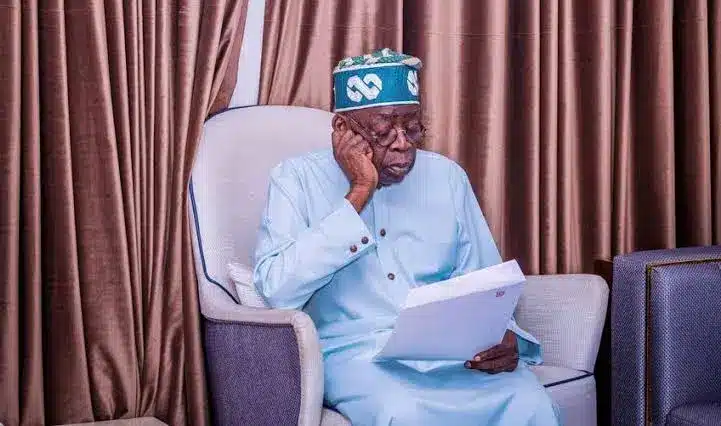
By Ademola Adekusibe
Something snapped in Nigeria yesterday. It wasn’t just the announcement that President Tinubu had pardoned 175 convicts; it was the final confirmation that in this country, crime no longer carries consequence. It was the state’s open confession that Nigeria’s justice system is now a casino, and those with connections always win.
Let’s start with one name that should haunt every soldier who ever wore the uniform: Major Suleiman Alabi Akubo. In 2008, a military court didn’t just find him guilty; it laid bare the horror of his betrayal. The man stole 7,000 weapons from the Nigerian Army, weapons meant for the nation’s defense, and sold them to militants who turned them on his own comrades. Soldiers died. Innocent Nigerians died. The country bled. And the General Court Martial, in its rare moment of courage, sentenced him to life imprisonment.
That was supposed to be justice. That was supposed to be a warning that no one, no matter how decorated, could betray the flag and walk free. But now, the same Nigeria whose sons were buried by bullets he sold has opened the prison gates and called it “presidential mercy.” Mercy for treason. Mercy for blood money. Mercy for a man whose greed armed killers and destabilized the nation.
If this is mercy, then what do we call justice?
And then there’s Maryam Sanda, a woman who, by her own actions, turned her matrimonial home into a slaughterhouse. The night she killed her husband wasn’t an accident; it was a progression of rage, five failed attempts before the fatal strike. The court found her guilty of culpable homicide and sentenced her to death by hanging. Nigerians thought it was closure. The law had spoken. But in this new Nigeria, even murder has an escape route, a back door guarded by sympathy, privilege, and presidential benevolence.
Today, she walks free. Her victim remains six feet below, voiceless, silenced forever. Is this how we honour the dead? By setting their killers free in the name of “mercy”? If Maryam Sanda deserves pardon, then what message are we sending to every man or woman enduring domestic violence? That if their abuser kills them, justice can later be undone with a signature?
And this isn’t even about two names. The rot runs deeper. Among those granted clemency were illegal miners, men who have turned parts of Zamfara and Niger State into killing fields. They were handed over to a politician, yes, a politician, as though the state were transferring cattle, not convicts. Do we even realize how insane that sounds?
Then there’s the drug traffickers, the billion-naira fraudsters, and bribe-takers like Farouk Lawan, once caught stuffing $500,000 into his agbada like a man packing sin into his conscience. They, too, found mercy. While ordinary Nigerians sit in jail for stealing yams, the powerful steal nations and go home with presidential blessings.
What sort of country pardons a man who sold weapons to militants but keeps forgotten prisoners locked up for years without trial? What manner of justice rewards murder with mercy but starves the poor of fairness? If clemency is now a luxury reserved for those whose crimes shook the nation, then we have entered the age of moral bankruptcy.
This isn’t compassion. It’s corrosion. It’s the state officially declaring that morality is negotiable, that you can destroy lives, arm terrorists, betray your country, and still find redemption as long as the corridors of power recognize your name.
And perhaps the cruelest part? The families of the victims, the widows, the orphans, the soldiers who died holding their rifles against bullets sold by Akubo, were not even consulted. Justice wasn’t just denied; it was mocked.
So yes, call it “Presidential Pardon” if you must, but let’s say what it truly is: a betrayal of every honest man who ever stood for something in this country. A message to every Nigerian that the law is not a moral compass, it’s a privilege card.
Tomorrow, when another officer sells arms to insurgents, when another wife kills her husband, when another politician embezzles billions, and we ask, “Why are people this reckless?” the answer will stare us in the face: because the system rewards the wicked and excuses evil when it’s done in expensive English.
This wasn’t mercy. This was moral suicide.
Credit: The Yoruba Times

Gov. Ododo Inaugurates Advanced Security Drones, Vows Zero Tolerance for Criminality in Kogi

Gov. Ododo Calls for Total Mobilisation as APC Begins Strategic E-Registration Drive in Kogi

AFCON’25: Super Eagles Beat Egypt on Penalties, Claim Bronze Medals

Kogi Police Prohibits, Warns Against Use of Vehicles With Covered Number Plates

How We Discovered Drugs In The Residence of Kwara Senator Accusing Us of Corruption. – NDLEA

Kogi Govt. Commences Staff Audit For State Civil Servants Dec. 5th

Gov. Ododo Inaugurates Advanced Security Drones, Vows Zero Tolerance for Criminality in Kogi
Gov. Ododo Calls for Total Mobilisation as APC Begins Strategic E-Registration Drive in Kogi
AFCON’25: Super Eagles Beat Egypt on Penalties, Claim Bronze Medals
Kogi Police Prohibits, Warns Against Use of Vehicles With Covered Number Plates
How We Discovered Drugs In The Residence of Kwara Senator Accusing Us of Corruption. – NDLEA
Kogi Govt. Commences Staff Audit For State Civil Servants Dec. 5th
-
News1 year ago
Kogi Police Prohibits, Warns Against Use of Vehicles With Covered Number Plates
-
 News1 year ago
How We Discovered Drugs In The Residence of Kwara Senator Accusing Us of Corruption. – NDLEA
-
 News2 years ago
Kogi Govt. Commences Staff Audit For State Civil Servants Dec. 5th
-

 News2 years ago
Nigeria’s Public Officials Received ₦721bn Bribe In 2023 – UN, NBS
-

 Politics2 years ago
KOGI2023: AA’s Candidate, Braimoh, Promises To Regenerate State’s Economy, Receives Decampees
-

 News3 years ago
Sen. Smart Adeyemi Set To Kick-off N250M Empowerment Programs In Kogi West
-

 News2 years ago
PDP Will Expel Wike At Appropriate Time – Bwala
-
 News3 years ago
WAEC Releases 2022 WASSCE Results